
airgeddon
Blockchain technology is often synonymous with cryptocurrency, yet its potential extends far beyond this narrow scope. Various sectors are beginning to harness its capabilities for…
Airgeddon: Understanding Wireless Network Security and Testing Tools

What Makes Airgeddon Important in Cybersecurity
Airgeddon is a powerful and widely used script designed for wireless network auditing and security testing. It is primarily used by cybersecurity professionals, ethical hackers, and IT learners to assess the strength and vulnerabilities of Wi-Fi networks. As wireless connectivity becomes more common, ensuring the security of these networks has become increasingly important, and tools like Airgeddon help in identifying potential risks.
The purpose of Airgeddon is not to promote misuse but to support ethical practices in network testing. By understanding how networks can be attacked, professionals can implement better defenses and ensure safer communication systems.
How Airgeddon Functions in Network Testing
At its core, Airgeddon operates as a bash script that integrates multiple tools for wireless auditing into a single, easy-to-use interface. It simplifies complex testing procedures, allowing users to perform advanced security checks without manually running multiple commands.
Airgeddon works by interacting with wireless network adapters that support monitoring mode. It enables users to scan available networks, analyze their encryption protocols, and simulate real-world attack scenarios to evaluate their security level. This process helps identify weak passwords, outdated encryption methods, and other vulnerabilities.
The Role of Monitoring Mode
One of the essential aspects of using Airgeddon is monitoring mode. This feature allows the wireless adapter to capture packets transmitted over the network. By analyzing these packets, users can gain insights into how data flows within a network and detect potential security weaknesses. Monitoring mode is a fundamental concept in wireless security testing and is crucial for understanding how tools like Airgeddon operate.
Key Features That Define Airgeddon
Airgeddon stands out due to its comprehensive features that combine multiple tools into one framework. It supports different wireless attack methods, including handshake capture, deauthentication testing, and evil twin scenarios. These features allow users to simulate real-world threats and understand how attackers might exploit network vulnerabilities.
Another notable feature of Airgeddon is its user-friendly menu system. Even though it performs advanced tasks, the structured interface guides users step by step, making it easier for beginners to learn while still offering powerful capabilities for experienced professionals.
Educational Value of Airgeddon for Learners
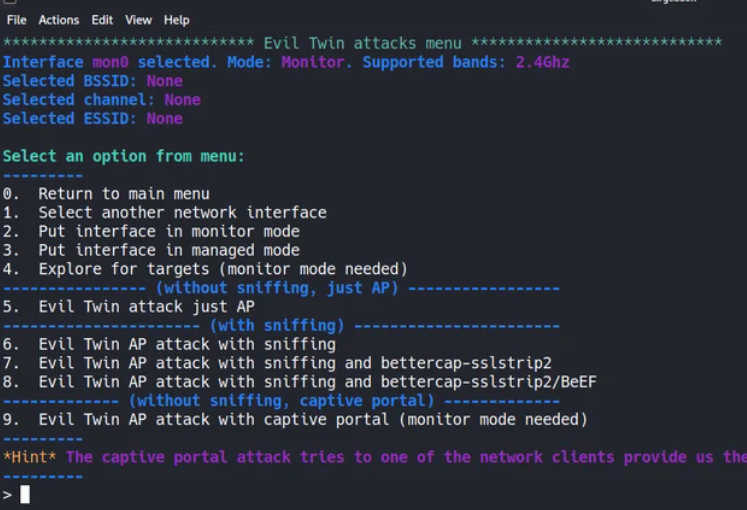
For students and individuals interested in cybersecurity, Airgeddon serves as an educational resource. It provides hands-on experience in understanding how wireless networks operate and how they can be tested for weaknesses. By using Airgeddon in a controlled and ethical environment, learners can develop practical skills that are highly valuable in the cybersecurity field.
The tool also helps in bridging the gap between theoretical knowledge and real-world application. Instead of just reading about network vulnerabilities, users can actively test and analyze them, leading to better understanding and retention of concepts.
Ethical Use and Responsibility
While Airgeddon is a powerful tool, it must be used responsibly and ethically. Unauthorized testing of networks without permission is illegal and can lead to serious consequences. The primary purpose of Airgeddon is to assist in improving security, not exploiting weaknesses for malicious purposes.
Ethical hackers and security professionals use tools like Airgeddon to strengthen networks by identifying vulnerabilities before malicious actors can exploit them. This responsible approach ensures that technology is used for protection rather than harm.
Legal Awareness in Cybersecurity Tools
Understanding the legal aspects of using Airgeddon is essential. Users should always perform tests on networks they own or have explicit permission to audit. This ensures compliance with laws and ethical standards while allowing users to benefit from the tool’s capabilities safely.
Airgeddon in Real-World Applications
In practical scenarios, Airgeddon is used by cybersecurity professionals to conduct penetration testing and network audits. Organizations use such tools to evaluate the security of their wireless infrastructure and ensure that sensitive data remains protected.
By identifying vulnerabilities early, companies can implement stronger encryption methods, improve password policies, and secure their networks against potential attacks. This proactive approach is essential in today’s digital environment, where cyber threats are constantly evolving.
Challenges and Limitations
Despite its powerful features, Airgeddon has certain limitations. It requires compatible hardware, such as wireless adapters that support monitoring mode, and may not function effectively on all systems. Additionally, beginners may initially find some concepts challenging, especially if they are new to cybersecurity.
However, with consistent practice and learning, these challenges can be overcome. Many users start with basic tutorials and gradually explore more advanced features, improving their understanding over time.
Who Should Learn About Airgeddon
Airgeddon is suitable for a variety of users, including students studying cybersecurity, IT professionals, network administrators, and ethical hackers. It is also beneficial for organizations that want to improve their network security by conducting regular audits.
Even beginners with a basic understanding of networking can start learning about Airgeddon, as its structured interface makes it easier to navigate complex tasks. With dedication and ethical use, it can become a valuable skill in the field of cybersecurity.
Conclusion: The Growing Importance of Airgeddon
In conclusion, Airgeddon is a powerful and educational tool for wireless network security testing. It provides users with the ability to analyze vulnerabilities, understand network behavior, and improve overall security practices. As the reliance on wireless communication continues to grow, tools like Airgeddon play a critical role in ensuring safe and secure digital environments.
By using Airgeddon responsibly and focusing on learning and improvement, individuals and organizations can strengthen their networks and stay protected against potential cyber threats. Its combination of functionality, accessibility, and educational value makes it an essential tool in the modern cybersecurity landscape.